📞 +86 19574989725 sales@micainsulation.com 🌐 Factory-Direct · Export Worldwide
Get Quote
Application Industry

Mica for Metallurgy & Heavy Industry — Thermal Protection for Steel Foundries

Steel foundries operate under the most demanding conditions imaginable. Furnace temperatures exceed 1800°C, molten metal flows through equipment at extreme heat, and traditional insulation materials simply cannot survive. This is where high-temperature mica sheet technology becomes critical — delivering thermal protection that ensures safe, efficient operations. The difference between profitable production and costly downtime often comes down to selecting the right insulation for extreme conditions.

◆ Furnace Performance Overview
Arc Furnace Temp>1800°C
Blast Furnace Temp~2000°C
Phlogopite Max TempUp to 1000°C
Dielectric Strength150–200kV/mm
Thermal Conductivity0.25–0.5W/m·K
Ladle Capacity>1600°C Molten
2000°C Foundry Grade
Mica insulation for electric arc furnace and blast furnace - high temperature thermal protection for steel foundry operations at 2000°C
The Challenge

Why Standard Insulation Fails in Steel Production

Foundry operations create thermal environments that push materials to their absolute limits. Electric arc furnaces subject equipment to rapid temperature changes exceeding 100°C per minute, while blast furnaces maintain sustained temperatures around 2000°C. These extreme conditions — combined with molten metal splash and exposure to corrosive gases — rapidly destroy traditional insulation products.

  • Fiberglass insulation — breaks down within days under foundry conditions
  • Polymer-based materials — melt or release toxic fumes at operating temperatures
  • Heat-resistant ceramics — crack under thermal shock, lack flexibility for complex equipment geometries

The consequences extend far beyond material failure. Poor insulation leads to massive energy waste, equipment damage, production delays, and serious worker safety hazards. Modern foundries demand insulation solutions engineered to handle these demanding conditions while supporting high-efficiency operations.
The Science

The Science Behind Mica's Superior Performance

Mica belongs to a unique class of natural minerals that combine exceptional thermal stability with practical application advantages. Two primary types — muscovite (white mica) and phlogopite (black/golden mica) — each offer distinct benefits for foundry challenges.

Muscovite (White Mica) delivers excellent thermal stability up to 500-600°C while maintaining structural integrity through thermal cycling. Its layered crystal structure forms natural barriers that control heat transfer effectively, making it ideal for applications requiring precise temperature management.

Phlogopite (Gold/Black Mica) withstands even more extreme temperatures — continuous exposure up to 700-1000°C — while offering outstanding flexibility. This flexibility proves particularly crucial in foundry equipment experiencing thermal expansion and vibration.

Mica insulation sheets allow controlled heat management without completely blocking thermal transfer. This balanced approach prevents dangerous heat buildup while maintaining the temperature profiles essential for metal processing.

Chemical resistance is another critical advantage. Molten metal splash, furnace gases, and aggressive cleaning chemicals constantly attack insulation systems. While organic materials degrade rapidly, mica maintains its protective properties even under prolonged exposure to harsh environments.

Detailed Comparison

Muscovite vs Phlogopite — Which Mica for Your Foundry?

Detailed 13-parameter property comparison between the two primary mica grades used in metallurgy and heavy industry. Select the grade that matches your operating temperature, thermal cycling, and chemical environment.

Property MuscoviteWhite Mica PhlogopiteGold/Black Mica Notes
◆ Physical Properties
Density (g/cm³) 2.76–3.10 2.78–2.85 Room temperature
Mohs Hardness 2–3 2.5–3 Soft, easy to cut and machine
Color Colorless to pale Brown to gold Influenced by Fe/Mg content
Dielectric Strength (kV/mm) 150–200 120–180 Measured at 500 Hz
Thermal Conductivity (W/m·K) 0.3–0.5 0.25–0.4 Excellent thermal insulation
Max Working Temperature (°C) 500–600 700–1000 Phlogopite excels at high temp
◆ Chemical Properties
Chemical Formula KAl₂(AlSi₃O₁₀)(OH)₂ KMg₃(AlSi₃O₁₀)(OH)₂ Cation substitution
SiO₂ Content (%) 45–50 38–42 Primary component
Al₂O₃ Content (%) 30–36 10–12 Higher in muscovite
MgO Content (%) 0–1 20–28 Higher in phlogopite — better heat resistance
K₂O Content (%) 9–10 8–9 Maintains layered structure
Water Solubility Insoluble Insoluble Stable in most acids/alkalis
1600°C Ladle Grade
Mica insulation for steel ladle handling molten metal at 1600°C - flexible thermal barrier preventing heat loss while protecting vessel integrity
Key Foundry Applications

Four Critical Applications in Steel & Metallurgy Operations

From electric arc furnaces to ladles handling molten metal above 1600°C — mica insulation delivers thermal protection across every high-temperature operation in modern foundries.

Electric Arc Furnaces & Induction Furnaces

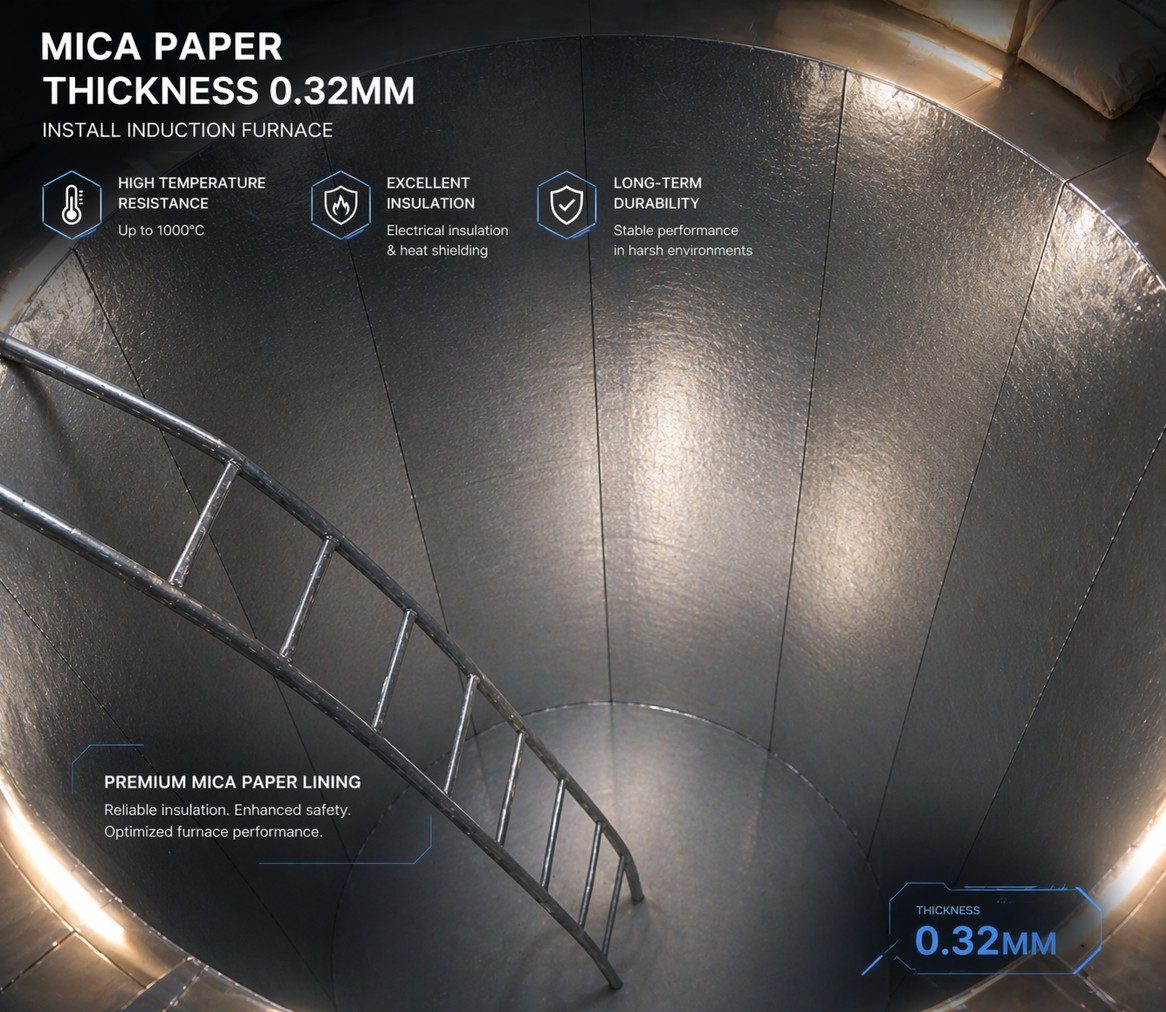
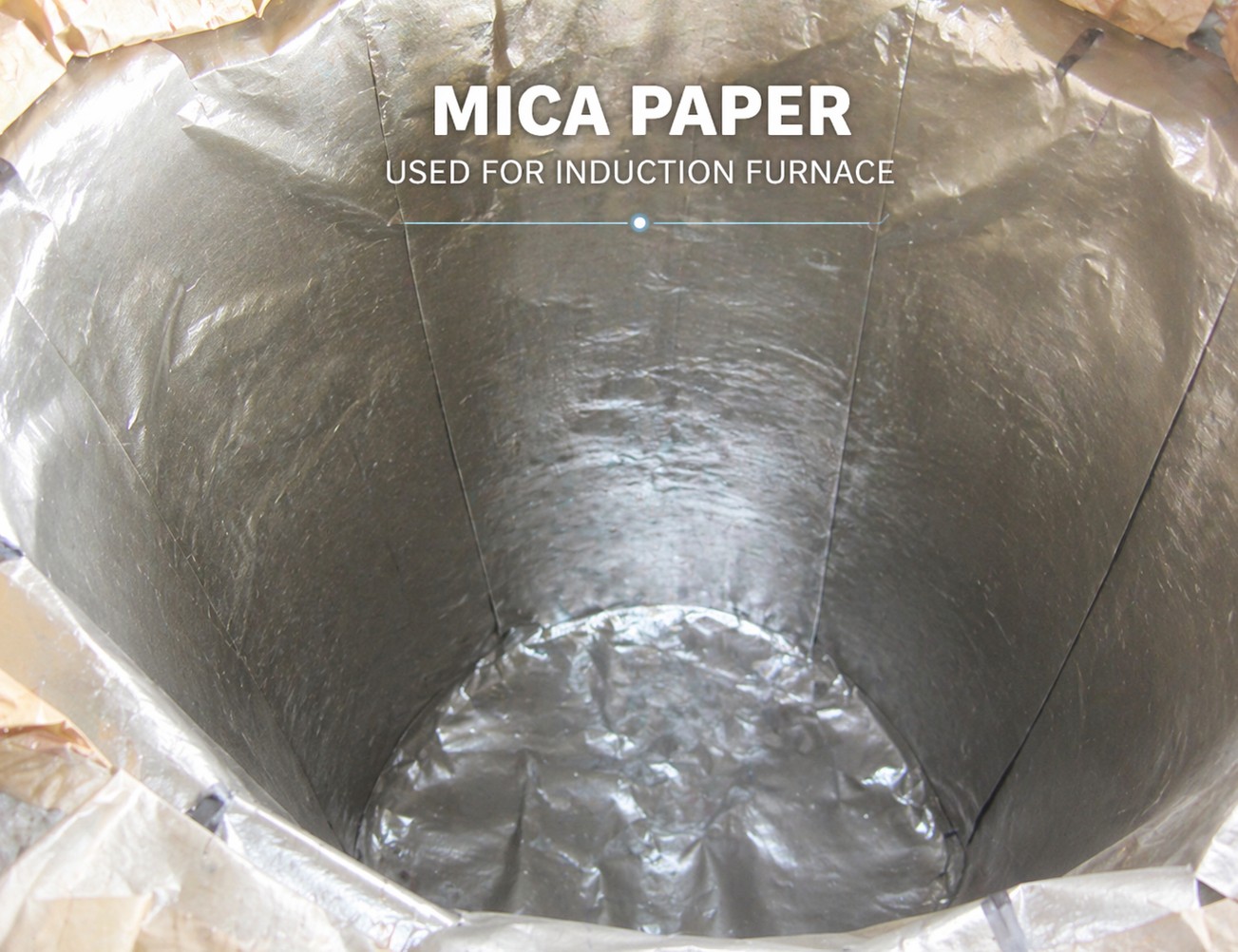
Electric arc furnaces and induction furnaces depend on high-temperature mica tape for critical insulation applications. The material wraps electrical conductors and supports refractory linings, providing essential protection against thermal shock while maintaining electrical insulation integrity. Mica's natural flexibility allows it to expand and contract with temperature changes — ensuring stable performance through thousands of heating cycles.

Steel Ladles & Continuous Casting

Ladles handle molten metal at temperatures exceeding 1600°C — creating extreme thermal stress on insulation systems. Flexible mica products provide the essential thermal barrier, preventing heat loss while protecting vessel structural integrity. The lightweight nature of mica insulation reduces overall ladle weight, improving operational efficiency. Continuous casting operations require precise temperature control — mica technology delivers the thermal management needed for consistent casting quality.

Furnace Body Protection & Energy Efficiency

Effective thermal insulation in industrial applications directly impacts energy consumption. Quality insulation reduces heat loss, lowers fuel consumption, and decreases operating costs. The energy savings from properly applied mica insulation often recover initial investment within months. Rapid heating and cooling cycles create stress that cracks rigid materials — mica's flexibility allows it to maintain protective barriers across thousands of thermal cycles.

Calcined Mica Tape for Electrical Components

Calcined mica tape provides essential protection for electrical components in foundry environments. The material's electrical insulation properties remain stable under the electromagnetic fields and thermal stress common in electric furnace operations. The versatility of mica insulation supports customized solutions tailored to specialized equipment needs — from furnace door seals to instrumentation protection.

Operational Benefits

Operational & Safety Benefits for Foundries

Beyond basic thermal protection — mica insulation delivers measurable operational improvements and creates safer, healthier working environments for foundry workers.

Energy Efficiency & Cost Savings

Reduced heat loss improves process consistency. Stable equipment temperatures mean better product quality, fewer rejects, and lower fuel consumption — ROI in months.

Extended Equipment Lifespan

Mica's durability reduces maintenance frequency and replacement costs. Though initial cost may be higher, longer service life and lower maintenance make mica economical for demanding applications.

Improved Worker Safety

Superior thermal barrier prevents dangerous heat buildup on equipment surfaces — reducing burn risks and creating a more comfortable working environment for foundry personnel.

Non-Toxic & Safe

Unlike synthetic materials that release harmful fumes when heated, mica maintains its safe properties throughout its service life — supporting healthier workplaces.

Flame Retardancy & Fire Safety

Natural flame retardancy provides critical fire safety benefits. During equipment failure, mica insulation helps contain heat and prevents fire spread — protecting personnel and facilities.

Chemical Resistance

Stable against molten metal splash, furnace gases, and aggressive cleaning chemicals. Unlike organic materials that degrade rapidly, mica maintains protective properties under prolonged harsh exposure.

Product Solutions for Metallurgy

Recommended Mica Products for Steel & Foundry Applications

Browse our most frequently specified mica insulation products for metallurgy, steel foundries, and heavy industry customers worldwide.

Conclusion

Maximizing Foundry Efficiency with Mica Insulation

The advantages of mica insulation in the foundry and steel industry make it essential for modern operations. From reducing energy consumption and improving product quality to enhancing worker safety and equipment reliability — mica materials deliver significant benefits across every operational dimension.

Mica processing technology continues to expand performance capabilities to meet evolving foundry demands. As the industry advances toward higher efficiency and stricter environmental standards, proven thermal protection becomes increasingly important.

The difference between profitable production and costly downtime often comes down to selecting the right insulation — mica delivers both.

Upgrading Your Steel Foundry's Thermal Insulation?

Our team works directly with steel mills, foundries, and heavy industry operators worldwide — supplying muscovite, phlogopite, and calcined mica for electric arc furnaces, induction furnaces, ladles, and continuous casting systems. Share your furnace type, temperature requirements, and annual volumes — we respond within 24 hours with samples, TDS, and factory-direct pricing.

Chat with us on WhatsApp